You Won't Forget Them: How to Stay Connected Through Love, Not Pain
One of the most common fears in grief is the worry that we might forget them. Perhaps you've noticed their voice becoming less distinct, or felt guilt after catching yourself laughing. These moments can feel like a betrayal — but they're actually a normal part of how grief works. Here, we explore why you won't forget them and how to stay connected through love.
How This Fear Arises
This fear can strike in quiet moments, often unexpectedly. You suddenly realise you haven't thought about them for a while — you've been laughing, smiling, enjoying a moment. Perhaps you've caught yourself thinking about a new relationship, or simply living your life without them at the front of your mind. Or perhaps you reach for the memory of their voice and find it's become less distinct. And then guilt arrives, sharp and painful.
If you've felt this fear, please know: you are not alone, and this is completely normal.
But here's what's important to understand: you don't need to remain connected to them only through pain. This thought can pull us back into grief as a way of holding on — and can obstruct our ability to heal.
So let me reassure you of two truths. Firstly, you will never forget them. Whilst memories may shift and change, the love you shared and the ways they shaped you remain woven into the fabric of who you are. Secondly, you can learn to remain connected to them through love rather than through pain.
You Will Never Forget Them
The profound truth is you will never forget them. As Elisabeth Kübler-Ross wisely said:
The reality is that you will grieve forever. You will not "get over" the loss of a loved one; you will learn to live with it. You will heal and you will rebuild yourself around the loss you have suffered. You will be whole again but you will never be the same. Nor should you be the same nor would you want to.
And as Hemingway beautifully expressed:
No one we love is ever truly lost.
How Grief Actually Works
Most people think grief slowly gets smaller with time, eventually diminishing to almost nothing. But the reality is beautifully different.
At first, when you're newly bereaved, grief can feel like all there is — this person-shaped hole that consumes everything. But over time, something gentler happens: grief stays the same size, but your life slowly begins to grow around it.
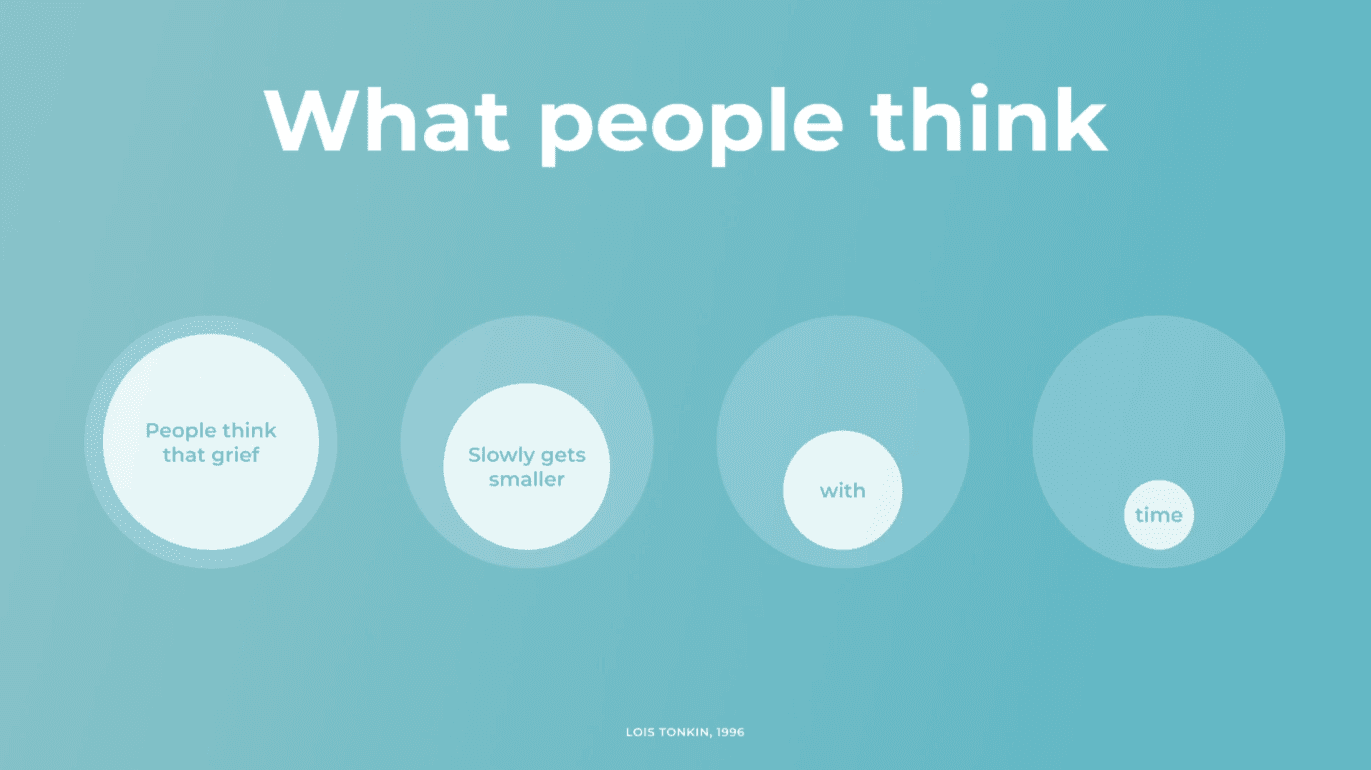
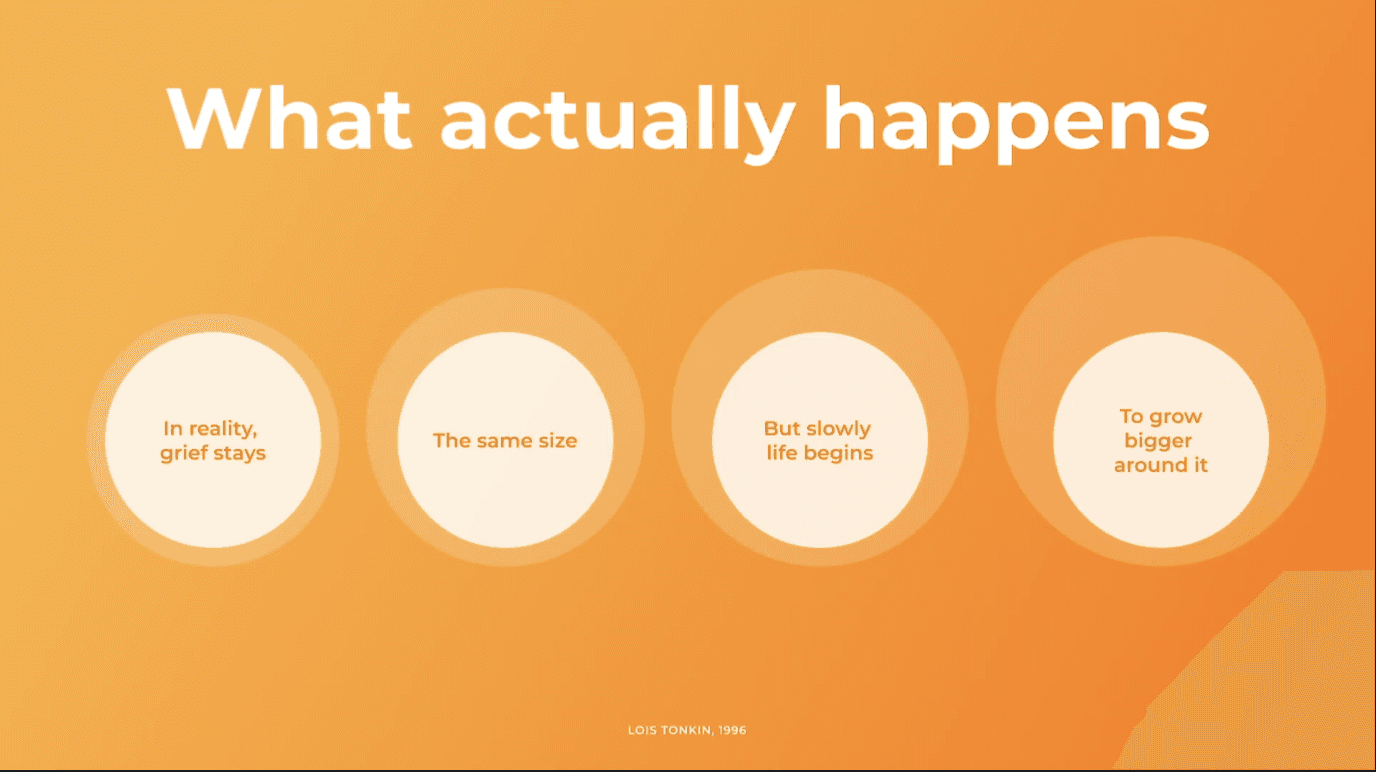
The memories, the death, and the grief never disappear. They'll always be part of your life. What changes is that you rebuild your life around this loss. It's not that your grief shrinks — instead, your life expands.
Your Relationship Continues
Here's what might sound surprising at first: their death doesn't end your relationship with them. You can learn to remain connected through love rather than pain.
As Colin Murray Parkes says:
One way and another we need to find a way of living with love.
Your relationship with them has been radically altered, but it continues in meaningful ways. Think of the parts of them that live within you: the positive traits they brought out in you, the values they inspired, the passions they shared, the guidance they would still give you today. Their voice is still within you.
Creating Touchstones: Practical Ways to Stay Connected
Studies have found that connecting to those who have died, and carrying them with us, actually reduces painful emotions while increasing positive ones. Finding tangible ways to express your ongoing relationship — what we call creating "touchstones" — can be deeply healing.
Sarah, who lost her husband David, found comfort in making his special pancakes every Saturday morning and wearing his old cardigan when she needed to feel close to him. These simple touchstones helped her stay connected in ways that brought comfort, rather than only pain.
Your touchstones might include places (their favourite park, locations where you shared memories), activities (cooking their signature dish, walks they loved), objects (a treasured piece of jewellery, photographs, a memory box), or rituals (lighting a candle in their memory, playing their favourite music, visiting meaningful places on significant dates).
The New Normal
You can't go back to life as it was, but you can create a new way of living. You don't want to forget your memories or push painful feelings aside. Instead, you find room in your heart for sadness in a way that leaves space for happiness when it comes along.
Over time, you're able to hold these emotions together as one. You realise it's possible to have both — the death and the grief, as well as a new, fulfilling way of living.
If You Would Like More Support
The Grief Works Programme is designed to provide comprehensive support you can trust to help you heal through grief. If you'd like to explore these themes in more depth, Sessions 21-23 ("Your New Normal," "Continuing Relationships," and "Staying Connected") guide you through this work step by step.
Rest assured: their death doesn't end your relationship with them. You won't forget them. You'll learn to carry them differently — building life around the loss while staying connected through love.
You don't have to go through grief alone
Grief Works is the world’s leading grief support programme that is designed to help you navigate
Try 30 Days Risk Free
Take your first step towards healing
Receive Julia’s free powerful practice that has helped thousands begin their healing journey. Plus, receive gentle weekly advice and support.
FAQs
Who is Grief Works for?
What will I get in the programme?
How does the programme work day to day?
Will this help if I feel overwhelmed, numb, or like I am not coping “normally”?
How do I gift this to someone who is going through loss?
Does Grief Works work on both iPhones and Android phones?
How does the 30 day money back guarantee work?
About Grief Works
Your Safety & Rights